


Dust Control Systems
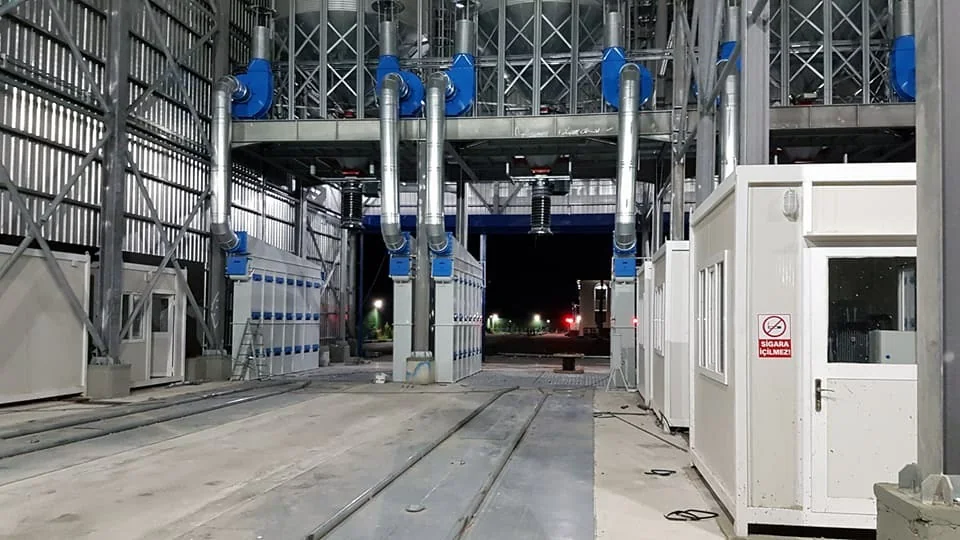
Dust control systems capture airborne dust at the source during grain unloading, conveying, and transfer. Solutions consisting of filters, aspiration lines, and collection equipment help keep the work environment clean, reduce dust buildup on equipment, and improve occupational safety conditions.
What Are Dust Control Systems and How Do They Work?
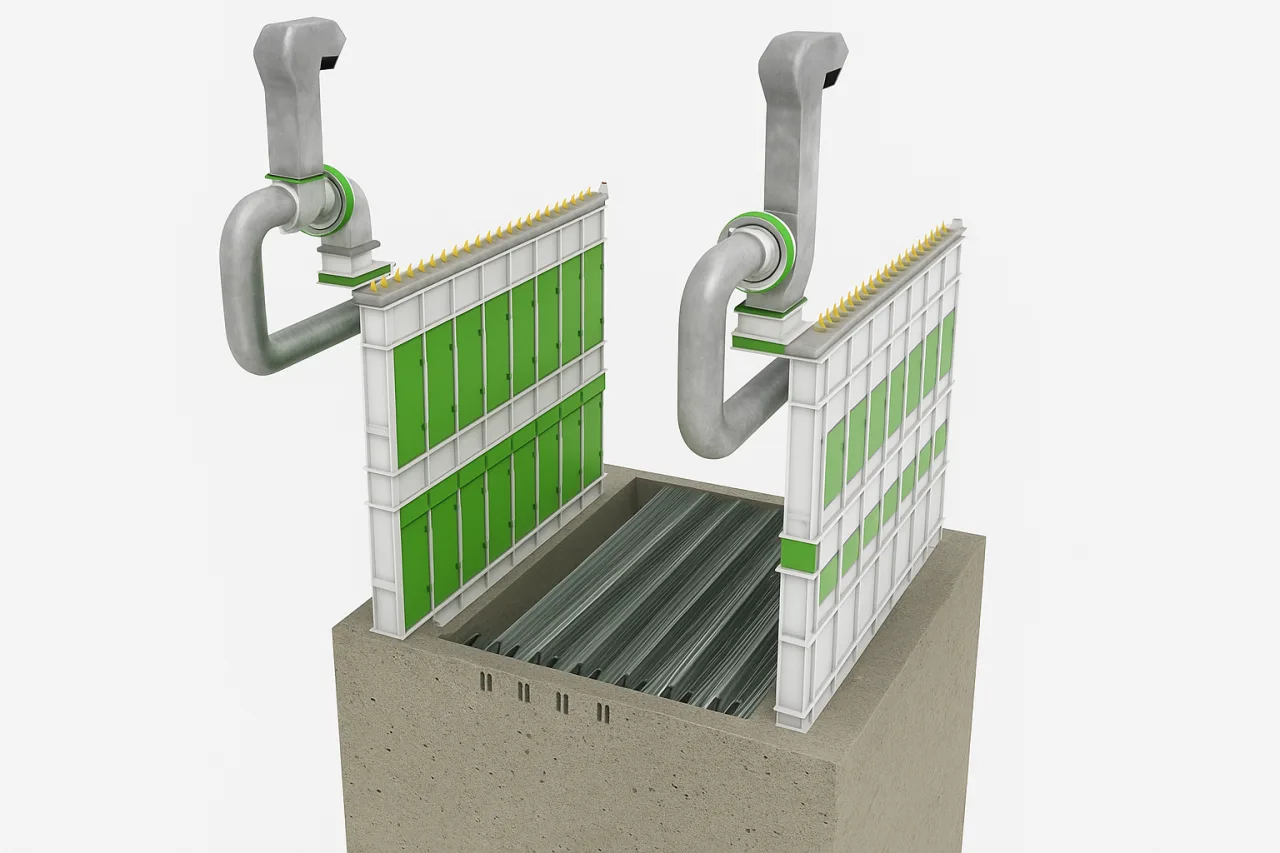
A dust control system collects dusty air at points where grain is dumped or transferred through suction lines. The filter unit separates airborne particles; cleaned air is discharged or recirculated according to system design.
Key Features
- Local extraction aimed at capturing dust at the source
- Modular structure of filter, aspiration line, and collection equipment
- Contribution to reducing visible dust in the work environment
- Controlled collection that supports maintenance and cleaning processes
Applications
- Receiving pits
- Elevator and conveyor transfer points
- Cleaning and packaging lines
- Silo fill-discharge and shipping areas
Integration with Plant and Automation Systems
Suction hoods are placed at transfer points and connected via ductwork to the fan and filter unit. They can be activated through automation linked to equipment operation.
Engineering and Product Selection
Dust generation points, air volume, particle characteristics, duct distance, filter area, and maintenance access are evaluated together in system design.
Frequently Asked Questions
Beyond cleanliness, they contribute to improving the work environment, equipment protection, and operational safety.
Local or central systems can be added to existing lines after reviewing transfer points and layout suitability.

30-Year Warranty
The galvanized material used is long-lasting

High Galvanized Coating
Durable and high-quality coating

Static Design
Correct static design through engineering analysis