


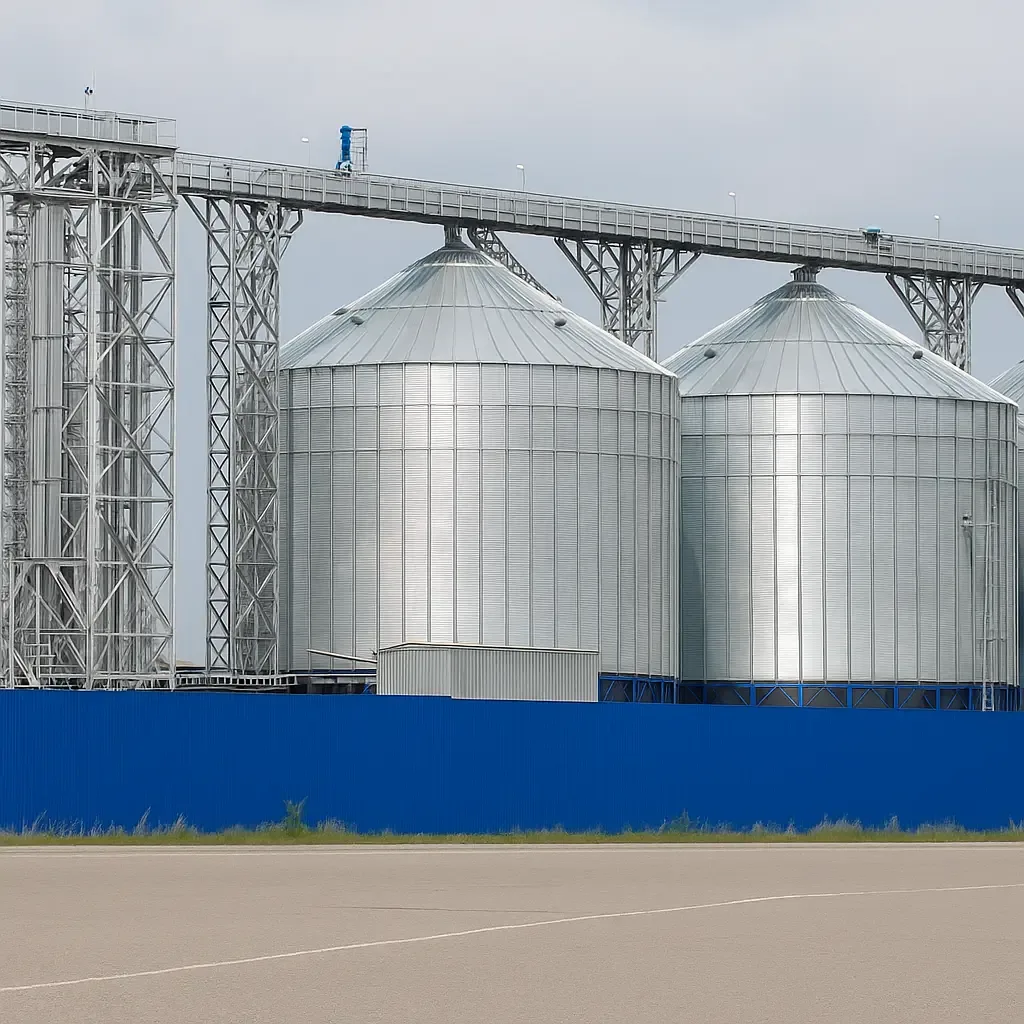
Automated loading and unloading lines reduce truck waiting time, human error, and stock mixing. Scale integration, bin selection, line interlocks, and emergency stop logic must be clearly defined in PLC programs. Basut Silo delivers fill/discharge automation with SCADA integration, commissioning tests, and operator training. Correct automation protects FIFO rotation, customer batch integrity, and moisture-based routing during peak harvest dispatch. Document every override during harvest so supervisors can audit routing decisions after disputes.
Line Scenarios and Priority Rules
Multi-bin outfeed automation should follow FIFO, customer batch, moisture profile, and bin fill level rules. During filling, monitor target bin level limits, pressure relief, and overfill protection.
Log all manual mode transitions; archive operator override reasons in SCADA logs. Line scenarios: fill, discharge, E-stop, communication loss, open hatch.
Basut Silo standard PLC function blocks enable fast commissioning; retrofit modules are available for existing plants.
- FIFO: older stock priority
- Batch: customer lot, moisture profile
- Overfill: level switch, pressure relief
- Manual mode: logged override reason
Scale and Weighing Integration
Scale signals must sync with PLC; gross/tare calculation should be automatic. Update calibration certificates on schedule; link weighing tolerance to recipes or shipping documents.
Truck scales, bin outfeed scales, and dosing scales integrate in different scenarios. Define weighing error alarm thresholds.
Basut Silo automation packages include scale protocol (Modbus, serial) and PLC integration as standard delivery.
Safety Interlocks
Block motor start when hatches are open, level is high, line is plugged, or explosion vent paths are blocked. Protect rotary valve, screw, and elevator start sequences with interlock logic.
Enforce lockout/tagout (LOTO) during maintenance. Place emergency stop (ESD) at accessible points along the line.
In ATEX zones, Ex-rated switches and motors must align with interlock circuits.
Commissioning Tests and Documentation
Simulate each scenario: fill, discharge, E-stop, communication loss, open hatch, overfill. Record test results in commissioning reports.
Basut Silo delivers with automation commissioning checklists, operator training, and PLC/SCADA backup files. Retrofit duration typically ranges from a few weeks to a month depending on existing panels and sensors.
Post-first-season performance review and alarm threshold optimization are recommended.
Weighbridge integration should include tare capture for empty trucks and automatic rejection when scale communication fails mid-load.
Operator Workflow and Reporting
Design HMI screens so bin selection, scale status, and interlock blocks are visible on one view—operators should not hunt across tabs during truck loading.
Export daily load summaries with batch ID, MC at dispatch, and bin source for ERP reconciliation and customer certificate requests.
Test weighbridge communication loss during commissioning by unplugging the scale mid-simulation—operators must see a hard stop, not a silent partial load.
Frequently Asked Questions
Is a scale enough without automation? Weighing may be accurate but manual bin routing and interlock control still risk errors. Automation also shortens truck waiting time. Integrated scale-PLC logic prevents shipping the wrong customer batch from the wrong bin.
How many bins can discharge at once? Depends on line capacity, dust control, and pressure relief—one bin per line is often safest. Parallel lines enable multi-bin discharge planning. Never open two bins into one dust collector without engineering review.
How long does retrofit take? Typically a few weeks to a month depending on existing panels, sensors, and scales. Phased commissioning minimizes downtime. Allow extra time if the weighbridge protocol is proprietary or undocumented. Test every interlock before the first harvest truck.